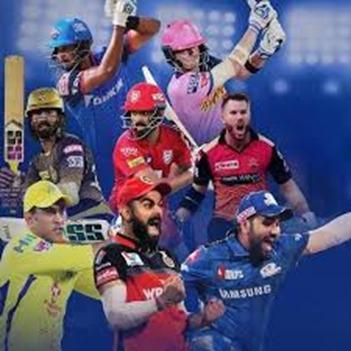
Indian Premier LeagueIPL: The League That Changed Cricket ForeverIndian Premier League
Indian Premier League (IPL)
The Indian Premier League (IPL) is a professional Twenty20 cricket league in India organised by the Board of Control for Cricket in India (BCCI). Founded in 2007, the league features ten state or city-based franchise teams.
The Indian Premier League (IPL) ranks as the most popular and richest cricket league in the world. Organizers hold it annually between March and May. The International Cricket Council (ICC) has allocated an exclusive window to the IPL in its Future Tours Programme, which reduces the number of international tours during its season. According to the Broadcast Audience Research Council, the IPL also draws the highest viewership among sports competitions in India.
History
Background
In April 2007, the Essel Group, in collaboration with IL&FS, launched the Indian Cricket League (ICL).
However, the Board of Control for Cricket in India (BCCI) and the ICC refused to recognize the ICL. The BCCI strongly opposed the involvement of its committee members in the ICL’s executive board. In retaliation, the BCCI boosted prize money for its domestic tournaments and imposed lifetime bans on players who joined the ICL, labeling it a rebel league.
Foundation
On 13 September 2007, as the 2007 ICC World Twenty20 began, the BCCI introduced the Indian Premier League (IPL), an annual franchise-based Twenty20 cricket tournament.
Organizers scheduled the inaugural season to begin in April 2008, launching it with a high-profile ceremony in New Delhi. Lalit Modi, BCCI Vice-President and the driving force behind the IPL, revealed key details about the league’s format, prize money, franchise revenue structure, and squad composition rules.
A seven-member governing council took charge of managing the league, which would also serve as a qualifying platform for the Champions League Twenty20 that year.
To determine team ownership, the BCCI held a franchise auction on 24 January 2008. Although they set the total base price at $400 million for eight franchises, the auction ultimately raised $723.59 million.
The IPL officially kicked off in April 2008 with eight teams: Chennai Super Kings (CSK), Mumbai Indians (MI), Delhi Daredevils (DD), Kings XI Punjab (KXIP), Deccan Chargers (DC), Rajasthan Royals (RR), Kolkata Knight Riders (KKR), and Royal Challengers Bangalore (RCB).
Expansions and Terminations
Before the fourth season in 2011, two new teams — Pune Warriors India and Kochi Tuskers Kerala — joined the IPL.
The Sahara Adventure Sports Group bought the Pune franchise for $370 million, while Rendezvous Sports World acquired the Kochi team for $333.3 million.
The BCCI terminated the Kochi franchise after just one season because it failed to pay the required 10% bank guarantee of the franchise fee.
In September 2012, the BCCI also terminated the Deccan Chargers’ franchise agreement when it couldn’t find new owners.
To replace the team, the BCCI held an auction in October 2012, which Sun TV Network won. The company established the Hyderabad franchise, naming it Sunrisers Hyderabad.
Organization
The IPL operates out of its headquarters at the Cricket Centre, located next to Wankhede Stadium in Churchgate, Mumbai. The Governing Council oversees league operations and tournament organization. As of March 2025, the council includes:
- Arun Singh Dhumal – Chairman
- Devajit Saikia – Honorary Secretary, BCCI (Member)
- Prabhtej Singh Bhatia – Honorary Treasurer, BCCI (Member)
- Avishek Dalmiya – Member
- Vankina Chamundeswara Nath – Indian Cricketers’ Association Representative (Member)
- CM Sane – CAG Nominee (Member)
Player Acquisition, Squad Composition, and Salaries
Franchises acquire players through an annual player auction, trading during trading windows, or by signing replacements for unavailable players.
Players register for the auction, set a base price, and franchises acquire them through the highest bid. Unsold players remain eligible as replacements.
Trades require player consent, and franchises must settle any contract differences.
Typically, the league permits three trading windows: two before the auction and one before the tournament. Franchises cannot trade players outside these windows or during the tournament, but they may sign replacements during the season.
The BCCI allocates each squad a salary cap of ?120 crore.
Franchises cannot pick Under-19 players unless they have already played first-class or List A cricket.
Prize Money
In 2022, the IPL offered total prize money of ?46.5 crore (approx. ?49 crore or US$5.8 million in 2023).
The champions received ?20 crore (approx. ?21 crore or US$2.5 million), while the runner-up earned ?13 crore (approx. ?14 crore or US$1.6 million). League rules require franchises to share half of any prize money with their players.
Title Sponsorship
From 2008 to 2012, DLF, India’s largest real estate developer, served as the IPL’s title sponsor, paying ?200 crore (US$23 million) for five seasons.
After 2012, PepsiCo secured the rights for ?397 crore (US$46 million) over five seasons. However, the company ended the deal prematurely in October 2015 due to the suspension of the Chennai and Rajasthan franchises.
The BCCI then reassigned the remaining two years of sponsorship to Chinese smartphone maker Vivo for ?200 crore (US$23 million).